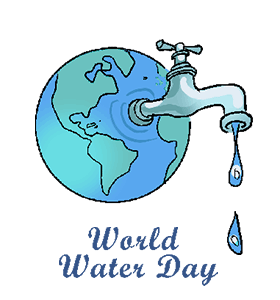
World Water Day aims to promote awareness about the 2.2 billion people worldwide living without access to safe water. It seeks to tackle the global water crisis, emphasizing themes such as water scarcity, sanitation issues, and water-related diseases. Not just about raising awareness, this day drives concerted action and facilitates the sharing of best practices.
Introduced in 1993 following a United Nations General Assembly resolution in 1992, World Water Day has a direct impact on people in America. Every year, the event underscores issues that affect Americans including water pollution, infrastructure decay, and the impact of climate change on water resources. Moreover, it brings attention to the plight of marginalized communities within the US, who often have less access to clean and safe drinking water. For example, the crisis in Flint, Michigan, exemplifies the acute water-related challenges some areas face.
In the United States, World Water Day is marked by various activities organized by government agencies, non-profit organizations, schools, and communities. These include educational programs, community clean-ups, and conservation projects. It aims to encourage individual and collective action, and often involves raising funds for water and sanitation projects both domestically and overseas. World Water Day is observed on March 22nd each year.
Top 9 Facts for World Water Day in 2026
The official theme for the 2026 observance is Water and Gender, a focus intended to highlight the critical intersection between water security and the empowerment of women and girls.
The global campaign is unified under the slogan Where Water Flows, Equality Grows, which emphasizes that access to clean water is a fundamental enabler of human rights and social equity.
A major highlight of the event will be the launch of the United Nations World Water Development Report 2026, titled Water for all people: Equal rights and opportunities, at the United Nations Headquarters in New York.
High-level discussions for the day are scheduled to align with the 70th session of the Commission on the Status of Women to integrate water governance into global feminist policy.
Research accompanying the observance reveals that women and girls in 53 surveyed countries spend more than 250 million hours every single day collecting water, a burden that severely limits their access to education and economic participation.
Statistics released for the campaign indicate that in 8 out of 10 households where water must be collected from off-site sources, the responsibility falls almost exclusively on women and girls.
The 2026 initiative draws urgent attention to the fact that approximately 1,000 children under the age of five die every day from diseases caused by unsafe water, sanitation, and poor WASH (Water, Sanitation, and Hygiene) conditions.
Global leaders and advocates will convene for a specialized meeting in Venice, Italy, to explore how "gender-responsive water solutions" can accelerate progress toward the Sustainable Development Goals.
The observance serves as a strategic milestone leading up to the 2026 UN Water Conference, aiming to establish a new international strategic framework that treats water security as a primary driver of climate resilience and peace.
In the News and Trending in the US for World Water Day
Top things to do in the US for World Water Day
Don't waste water!!! Make a conscious effort to use less water on World Water Day and on other days. Some ways to reduce water consumption include, showers instead of baths, washing full loads of clothing only and turning off the tap while washing dishes and brushing teeth.
Volunteer to help clean up trash and other debris along a beach or shore. This garbage and debris pollutes the water that we need in our daily lives.
Donate to a charity or organization that supports water issues in developing nations. WaterAid is an organization that works in poor countries to set up and maintain water sources, UNICEF
Watch documentaries about water-related issues such as pollution, contamination and diseases. Our top picks are Thirst (2004),Flow for the Love of Water (2008), Tapped (2009), Dhaka's Cholera Wars (2011), Troubled Water (2012), and The Fight for Water (2014).
Take part in a local World Water Day celebration, such as a film screening or a water conservation event. One of the largest events, the White House Water Summit in Washington DC, will be livestreamed.